


Tackling the paperwork required by your homeowners association (HOA) doesn’t have to be a headache. Having the right forms on hand is key to smooth communication and efficient HOA operations. This guide breaks down the essentials of HOA forms, explains their importance, and shows you how to use them for a well-run community.

What is an HOA form?
An HOA form is a standardized document used by homeowners’ associations to collect, share, or record specific information or requests. These forms help manage everything from architectural changes to payment of dues, ensuring that all communication is documented and consistent.
Unlike general HOA documents—which include items like CC&Rs (Covenants, Conditions & Restrictions), meeting minutes, or bylaws—HOA forms are interactive. They require action, such as filling out an application or submitting a request. This distinction is important when asking, what are hoa documents? HOA documents set the rules and structure, while HOA forms are the tools used to interact with those rules in daily life.
Why forms matter in HOA management
- They provide a clear, trackable record of requests and decisions
- They help ensure fair and consistent treatment for all members
- They make it easier to comply with governing documents and legal requirements
Forms can also play a critical role in resolving disputes. When a violation notice or complaint form is properly filled out and documented, it creates an official record that can be referenced in the event of a disagreement. This documentation is often crucial if the situation escalates to a hearing, mediation, or even legal review. In many cases, the existence of a clear paper trail can prevent misunderstandings from turning into costly disputes. According to legal specialists, documented violation processes significantly reduce enforcement-related litigation.
In addition, some forms are required by law or by the association’s own governing documents. For instance, certain states mandate that HOAs provide specific disclosure forms during the sale or transfer of a property. Failing to use the correct form in these cases can expose both the association and the homeowner to liability or delay the transaction. This requirement is reinforced by state-level disclosure guidelines emphasizing timely, accurate documentation.
What are the most common forms every HOA uses?
Most HOAs rely on a set of essential forms to manage routine operations and member interactions. These include:
- HOA Application form: Used for architectural changes, new member registration, or amenities access
- HOA Request Form: Covers requests for repairs, maintenance, or records
- Violation notice forms: Notify homeowners of rule violations and outline next steps
- Complaint forms: Allow members to raise concerns or disputes
- Payment and dues forms: Track assessment payments, late fees, or lien releases
These forms are vital because they:
- Streamline communication between residents and the board
- Document important actions for future reference
- Reduce misunderstandings and potential disputes
Each of these forms serves a specific purpose within the association’s workflow. For example, payment and dues forms not only help track who has paid assessments but also provide a record that can be referenced if a lien or foreclosure process becomes necessary. Having a standardized payment log can be especially important if the association needs to demonstrate compliance with its collection policies or respond to a challenge from a homeowner.
Violation notice forms are another cornerstone of effective HOA management. These forms typically include details about the alleged violation, references to the relevant section of the CC&Rs or rules, and a clear outline of the steps the homeowner must take to resolve the issue. By using a consistent format, the board ensures that all residents are treated fairly and that enforcement actions are well-documented.

How forms improve communication
By standardizing the way information is collected and shared, HOA forms help everyone stay on the same page. For example, a well-designed violation notice form ensures every homeowner receives the same information about the issue and their options for resolution.
Forms also make it easier for board members and managers to track the status of requests or complaints. When each step is documented—from the initial submission to the final resolution—there’s less risk of important details falling through the cracks. This level of organization is especially valuable in larger communities or in situations where multiple board members or committees are involved.
What specific types of templates are available for HOA management?
HOA management often involves repetitive paperwork. That’s where printable HOA forms and templates come in. These templates cover a wide range of categories, including:
- Financial forms: Budgets, expense reports, dues payment logs
- Architectural review forms: Requests for exterior changes or additions
- Violation forms: Notices, warnings, and resolution tracking
- Meeting forms: Agendas, sign-in sheets, and proxy ballots
- Insurance and lien forms: Master insurance policy documentation, lien release requests
Using templates not only saves time but also helps ensure that the association’s processes are consistent and legally compliant. For example, a template for a lien release request can help the board avoid missing critical information that could delay the removal of a lien from a property. Similarly, master insurance policy forms help document coverage for common areas, which is essential for both risk management and compliance with lender requirements.
Benefits of using standardized templates
- Save time by avoiding “reinventing the wheel” for every situation
- Ensure compliance with state law and governing documents
- Promote fairness and transparency in board decisions
Templates can also be tailored to the unique needs of each association. While some forms are fairly universal—such as those for dues payments or architectural requests—others may need to be customized to reflect local laws or the specific requirements of the community’s CC&Rs. Access to a library of state-specific templates can be a major advantage, especially for self-managed boards or new board members who may not be familiar with all the legal nuances.

Are there any legal requirements or guidelines HOAs must follow when creating or distributing these forms?
Yes, HOAs must pay attention to several layers of regulation:
- Federal laws: Such as the Fair Housing Act, which may affect how information is collected or used
- State and local laws: These often set requirements for record retention, notice periods, and disclosure
- Governing documents: Your association’s CC&Rs, bylaws, and rules may specify form requirements or approval processes
HOAs are also required to ensure that forms used for critical actions—like assessment collection, enforcement of rules, or architectural approvals—are consistent with both their governing documents and any applicable state statutes.
For example, many states have specific notice requirements for forms related to lien filings or foreclosure actions, such as Florida requiring at least 45 days’ written notice of intent to record a lien under Chapter 720. Using outdated or incomplete forms in these situations can expose the association to legal disputes or claims of improper procedure. It’s important to remember that some forms, such as those related to meeting notices or board elections, may need to follow strict timelines and content requirements set forth in your state’s HOA Act or similar statutes.
Best practices for compliance and record retention
- Regularly review forms with legal or professional guidance to ensure compliance
- Store completed forms securely, following state-mandated retention periods
- Clearly communicate how forms will be used and who will have access
Associations should also establish a clear policy for how long forms are kept, who is authorized to access them, and what steps are taken to protect sensitive homeowner information. For example, forms related to lien releases or foreclosure notices often contain personally identifiable information and should be handled with extra care. Many experts recommend retaining violation and enforcement records for at least five to seven years to cover applicable statutes of limitation and maintain evidence of consistent enforcement practices.
How can I customize a generic HOA form template to fit the specific rules of my community?
Customizing forms is essential for accuracy and compliance. Here’s how to tailor a generic template:
- Review your governing documents: Identify any unique requirements or procedures.
- Edit form language: Adjust fields and instructions to reflect your association’s terminology and rules.
- Check legal requirements: Make sure your form meets state and local guidelines.
- Test with a small group: Have board members or homeowners review the form before full rollout.
- Update as needed: Revise forms whenever rules or laws change.
It’s also helpful to cross-reference your forms with your association’s insurance policies, especially for requests involving common areas or claims under the master insurance policy. For example, if your community is submitting a claim for damage to a shared roof or pool area, the form should clearly specify the location, nature of the damage, and any steps already taken to mitigate further loss. Aligning your forms with your insurance carrier’s requirements can help streamline claims and avoid delays.
Tips for effective customization
- Use clear, plain language throughout
- Include only necessary fields to avoid confusion
- Add instructions or examples where helpful
When customizing forms, consider including checklists or sample scenarios to help users understand what information is required. For instance, an architectural request form might include a checklist of common improvements (fences, paint, landscaping) and a sample drawing or photo. This not only makes it easier for homeowners to complete the form correctly but also helps the board or committee process requests efficiently and fairly.
How HOA Member Services helps communities manage HOA forms digitally
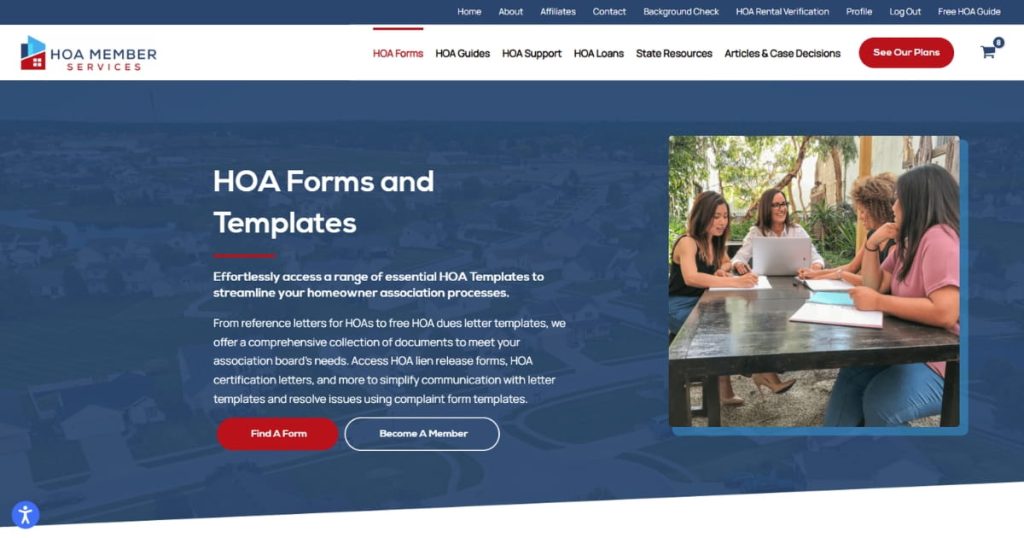
Managing paperwork shouldn’t slow down your community. HOA Member Services offers a robust online platform, making it easy to access a wide variety of HOA forms and templates. Whether you need HOA forms online for architectural requests, violation notices, lien releases, or insurance documentation, our resources are designed for ease and reliability.
From reference letters and free dues letter templates to certification letters and complaint forms, our digital library covers the full spectrum of HOA needs. These templates help boards and homeowners communicate clearly, resolve issues efficiently, and keep records organized for future reference.
Many associations find that digital forms not only save time but also reduce the risk of errors or lost paperwork. For example, using an online violation notice form allows for automatic tracking of when notices are sent, which can be crucial if a dispute arises over enforcement or compliance timelines. Similarly, digital forms for lien releases or payment plans can be stored securely and accessed by authorized board members or managers as needed, ensuring that important documents are never misplaced during board transitions.
Digital form management also supports transparency and accountability. When forms are accessible online, homeowners can easily find the correct version, reducing confusion about outdated templates or missing information. This is especially important for forms related to high-stakes issues like foreclosure notices, special assessments, or requests for records. Having a central repository for all official forms helps ensure consistency and compliance across the board.
Common mistakes to avoid with HOA forms
Even with the best intentions, it’s easy for associations to make mistakes that can lead to disputes or delays. Some of the most frequent pitfalls include:
- Using outdated forms that don’t reflect current laws or governing documents
- Failing to provide required disclosures or notices, especially for meetings, elections, or assessment increases
- Collecting more information than necessary, which can create privacy concerns
- Not updating forms after changes to state law or association rules
- Storing completed forms in unsecured locations or failing to restrict access to sensitive data
To avoid these issues, set a regular schedule for reviewing and updating your forms, and make sure all board members and managers know where to find the latest versions. Consider appointing a point person or committee to oversee form management and compliance.
Conclusion: Making HOA forms work for your community
The right forms are more than just paperwork—they’re essential tools for smooth, transparent, and fair HOA operations. By understanding the types of forms available, staying compliant, and using customizable templates, your association can avoid common pitfalls and focus on building a thriving community.
Ready to simplify your HOA paperwork?
Explore our comprehensive library of resources for tools, guides, and best practices tailored to your community’s needs. Check out our membership plans for access to even more templates—and, for Pro and HOA Team members, unlimited personal support from an experienced HOA attorney when you need it most. Join us today and make your HOA community thrive with the right resources!