

When an HOA board is not following the governing documents, homeowners often know something feels wrong — but they may not know how to organize the issue, what documents to review, what evidence to save, or what steps to take before escalating the dispute.
The HOA Board Compliance Member Checklist gives homeowners a clear, practical roadmap for evaluating board compliance concerns in a professional and organized way.
This checklist helps members:
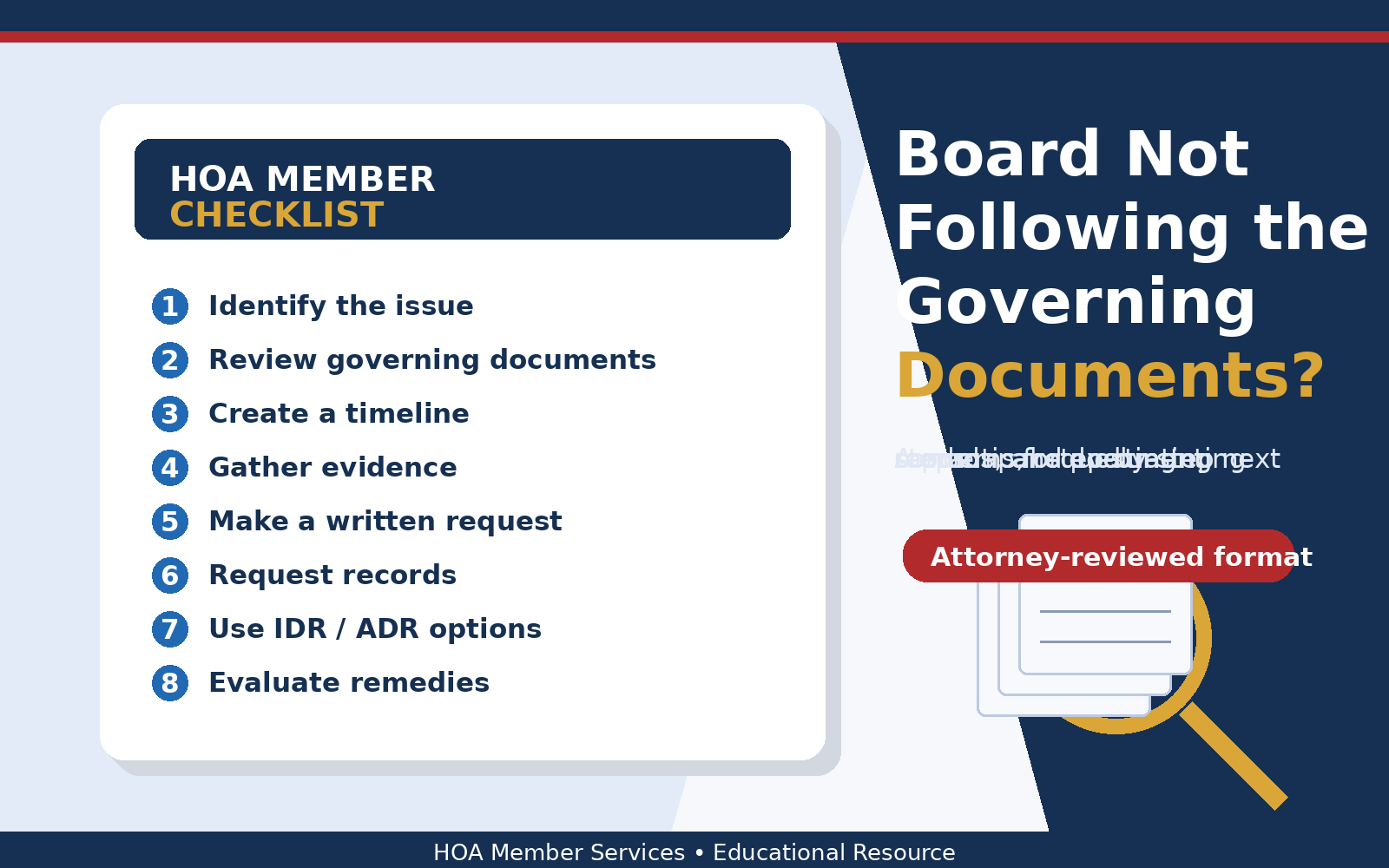
Identify the specific problem or pattern of conduct;
Connect the board’s action or inaction to the CC&Rs, bylaws, rules, policies, or applicable HOA statutes;
Create a timeline of events, communications, responses, and continuing harm;
Gather supporting evidence such as photos, emails, notices, minutes, reports, invoices, and records;
Make a clear written request to the board or management;
Request relevant association records;
Prepare for board meetings, homeowner forums, IDR, mediation, or other dispute resolution procedures;
Evaluate whether legal action, political remedies, board elections, recall efforts, or community organizing may be appropriate.
The checklist also identifies common mistakes homeowners should avoid, including relying only on verbal complaints, sending emotional emails, making unsupported accusations, missing deadlines, withholding assessments without legal advice, or filing suit before evaluating cost, risk, evidence, and available remedies.
This resource is especially useful for HOA members dealing with disputes involving maintenance obligations, records requests, selective enforcement, architectural issues, meetings, elections, assessments, insurance, safety concerns, nuisance complaints, or general board accountability.
Includes:
A structured step-by-step checklist, issue-identification prompts, evidence categories, records request guidance, dispute resolution considerations, litigation evaluation questions, and a practical roadmap for next steps.
Educational use only. HOA laws vary by state, and every association’s governing documents are different. Members should consult qualified legal counsel before taking formal legal action.