
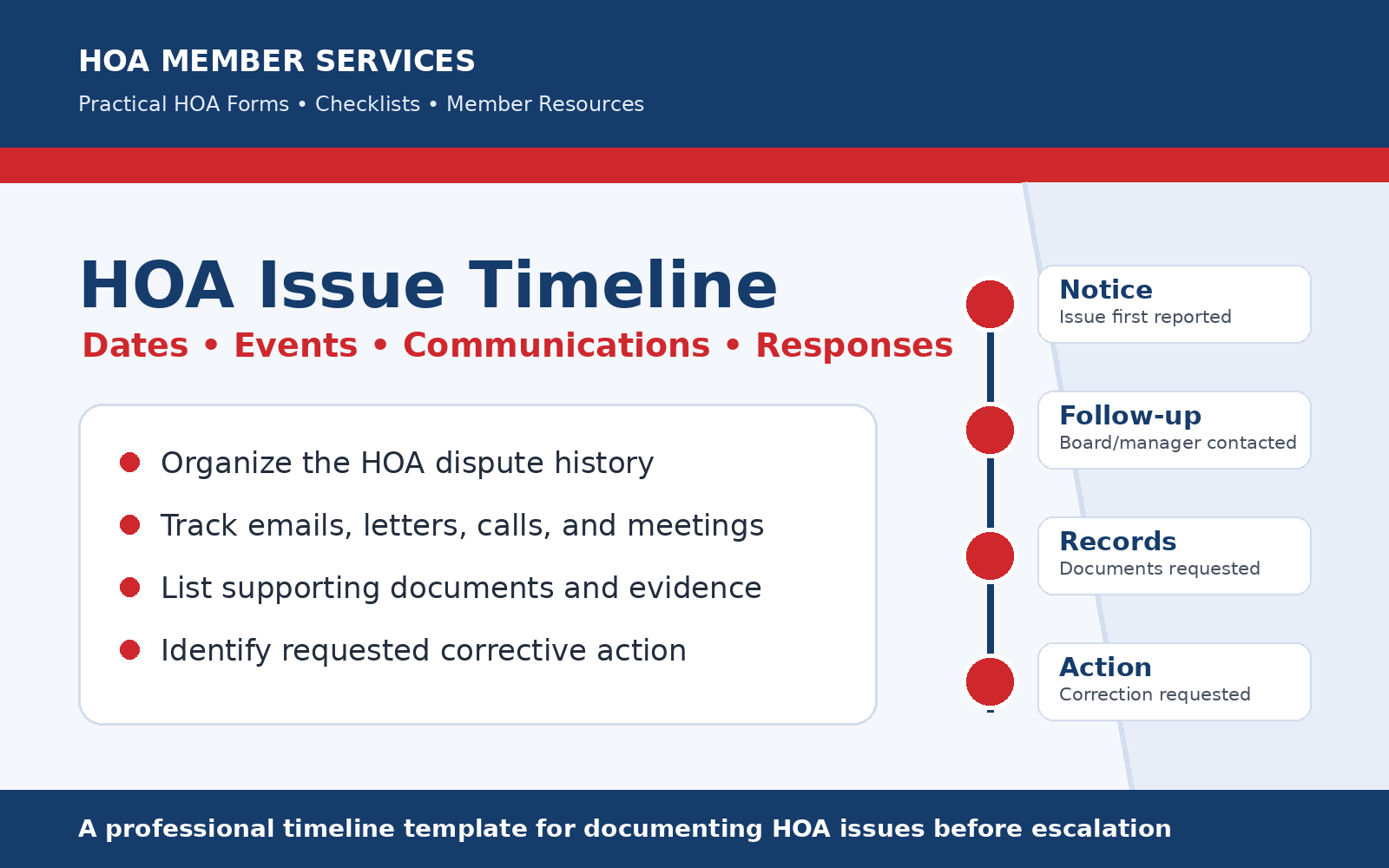

When an HOA issue becomes frustrating, the facts can quickly become scattered across emails, letters, photos, meeting notes, text messages, records requests, and conversations. Without a clear timeline, it can be difficult to explain what happened, when it happened, who was notified, how the association responded, and what corrective action is being requested.
The HOA Issue Timeline Template gives homeowners a structured way to organize the history of an HOA dispute in a professional and easy-to-follow format.
This template helps members document:
The basic issue, property, association, and management company information;
A short summary of the problem and requested result;
Relevant CC&R, bylaw, rule, policy, or statutory provisions;
A detailed timeline of events, communications, association responses, and supporting documents;
Sample completed timeline entries;
A communications log for emails, letters, calls, portal messages, meetings, and conversations;
Records requested from the association and whether those records were produced;
Board meetings, hearings, IDR, mediation, or other dispute resolution events;
A list of supporting evidence;
The current status of the issue;
The specific corrective action being requested.
This template is especially useful for HOA disputes involving common area repairs, leaks, maintenance failures, selective enforcement, records requests, architectural denials, election concerns, meeting issues, nuisance complaints, insurance issues, or other board compliance concerns.
By using this timeline, members can avoid emotional or disorganized complaints and instead present a clear record showing the sequence of events, the documents that support the issue, and the outcome being requested.
Includes:
A fillable HOA issue timeline format, sample completed entries, communications log, records request tracker, meeting/IDR/mediation tracker, evidence list, current status section, corrective action request section, and notes section.
Educational use only. HOA laws vary by state, and each association’s governing documents are different. Members should consult qualified legal counsel before taking formal legal action.